
Each report is prepared by a certified specialist (radiologist).
Cancer Prevention – Why It Matters All Year Round
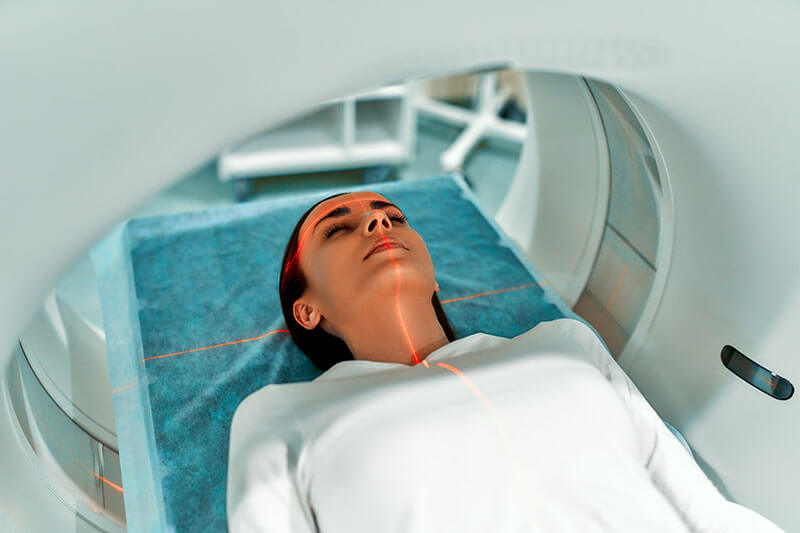
Cancer prevention is often associated primarily with regular check-ups and screening. In reality, it is a much broader concept. It includes both measures that can help reduce the risk of developing certain cancers and screening programmes designed to detect selected cancers at an early stage.
To mark International Cancer Day, Eurodiagnosis is launching Cancer Prevention Month. It is an opportunity not only to introduce a special offer for our patients, but also to highlight the importance of taking care of your health throughout the year.
What is cancer prevention?
Cancer prevention can be divided into several areas.
Primary prevention
Primary prevention aims to reduce factors associated with an increased risk of developing cancer. This includes not smoking, limiting alcohol consumption, staying physically active, maintaining a healthy body weight, following a balanced diet and protecting the skin from excessive UV exposure.
Vaccination against certain infections associated with an increased risk of specific cancers can also play an important role.
Secondary prevention
Secondary prevention focuses on detecting cancer as early as possible, often before advanced symptoms develop. This is primarily achieved through appropriately selected cancer screening programmes.
However, there is no single set of cancer screening tests suitable for everyone. Recommendations may depend on factors such as age, sex, family history and individual risk factors.
Why is early detection important?
Some cancers can develop without characteristic symptoms in their early stages. Feeling well should therefore not be considered the only indication that everything is fine.
Screening programmes are designed to detect certain diseases or abnormalities at an earlier stage, potentially before a person experiences symptoms.
At the same time, new, persistent or concerning symptoms should always be discussed with a doctor rather than trying to select diagnostic imaging tests independently.
Which tests are used in cancer prevention?
The recommended tests depend on the type of cancer and the individual patient. Screening and early detection may involve examinations such as mammography, cervical screening including HPV testing, colonoscopy, and other tests recommended for specific groups.
It is important to remember that not every diagnostic examination is a screening test.
This also applies to magnetic resonance imaging (MRI) and computed tomography (CT). Both are extremely important diagnostic tools, but this does not mean that every healthy person should undergo preventive MRI or CT scans.
The appropriate imaging method should be selected according to medical indications, symptoms, risk factors and previous examination results.
What role does diagnostic imaging play in oncology?
Diagnostic imaging plays an important role at different stages of cancer diagnosis and treatment.
Depending on the clinical situation, imaging examinations can help doctors characterise abnormalities, assess their location and extent, plan further management and monitor changes over time.
Performing the scan itself, however, is only one part of the diagnostic process.
Equally important is the interpretation of the images by a radiologist, taking into account the patient’s clinical information and previous examinations.
Diagnostic imaging in different types of cancer
The role of diagnostic imaging varies depending on the type and location of the suspected or diagnosed cancer.
Breast cancer
Imaging plays an important role in the detection and diagnosis of breast cancer. Mammography and breast ultrasound are commonly used, while breast MRI may be recommended in selected clinical situations.
The appropriate examination depends on factors such as the patient’s age, individual risk and previous findings.
Prostate cancer
In patients with suspected prostate cancer, multiparametric prostate MRI (mpMRI) can form an important part of the diagnostic pathway.
MRI can provide detailed information about suspicious areas within the prostate and may help guide subsequent diagnostic decisions.
Lung cancer
Computed tomography (CT) of the chest plays a major role in the diagnosis and assessment of lung cancer.
CT provides detailed images of the structures within the chest and may be used at different stages of diagnosis, staging and follow-up.
Colorectal cancer
Screening tests, including colonoscopy, play an important role in the prevention and early detection of colorectal cancer.
Once cancer has been diagnosed, diagnostic imaging such as CT may be used to assess the extent of the disease and support further treatment planning.
Brain and central nervous system tumours
Brain MRI is one of the key imaging examinations used in the diagnosis and follow-up of brain and central nervous system tumours.
It provides detailed images of brain structures and can help assess abnormalities and monitor changes over time.
Abdominal cancers
CT and MRI are widely used in the diagnosis and monitoring of cancers affecting organs such as the liver, pancreas and kidneys, as well as other abdominal structures.
The most appropriate imaging technique depends on the organ being assessed, the purpose of the examination and the individual clinical situation.
It is important to remember that not every imaging examination is a screening examination. The appropriate diagnostic method should be selected on the basis of medical indications.
Why can comparing previous scans be important?
When a patient has undergone more than one imaging examination over time, comparison with previous scans can provide the radiologist with valuable additional information.
It may help determine whether an abnormality has remained stable, changed in size or appearance, or whether new findings have developed.
For this reason, it is worth keeping previous imaging examinations including the original images, not only the written radiology reports.
What is a radiology second opinion?
A radiology second opinion involves an independent review of an existing imaging examination by another radiologist.
Patients may seek a second opinion when they would like their original radiology report reviewed, want their scan assessed by a radiologist with experience in a particular subspecialty, or would like an additional assessment before discussing the next steps with their treating doctor.
In complex cases, including oncology, the radiologist’s subspecialist experience can be particularly relevant.
A radiology second opinion does not replace consultation with the treating physician. It provides an additional radiological assessment that can be considered alongside the patient’s symptoms, medical history and other test results.
Cancer Prevention Month at Eurodiagnosis – 10% off
To mark International Cancer Day, throughout October we are running Cancer Prevention Month at Eurodiagnosis.
From 1 to 31 October 2026, patients can receive 10% off their entire order.
How to use the discount?
Simply enter the following promotional code when placing your order:
ONKO10%
The discount applies to the entire basket and is not limited to patients with cancer.
You do not need to have a cancer diagnosis or suspected cancer to use the promotion.
The ONKO10% code can be used once per patient during the promotional period.
Full terms and conditions of the Cancer Prevention Month promotion are available on the Eurodiagnosis website.
Cancer prevention starts with awareness
Cancer prevention does not mean undergoing as many medical examinations as possible.
It means reducing modifiable risk factors, participating in appropriate screening programmes, paying attention to persistent or concerning symptoms and discussing them with a healthcare professional.
It is also worth keeping your medical records and previous imaging examinations. If further diagnostic imaging is needed in the future, previous scans can provide an important point of comparison for the radiologist.
From 1 to 31 October 2026, use code ONKO10% to receive 10% off your entire order at Eurodiagnosis.
The information provided in this article is for educational purposes only and does not replace medical advice or individually recommended cancer screening.
