
Each report is prepared by a certified specialist (radiologist).
Who Writes an MRI Report and Why Does It Matter?
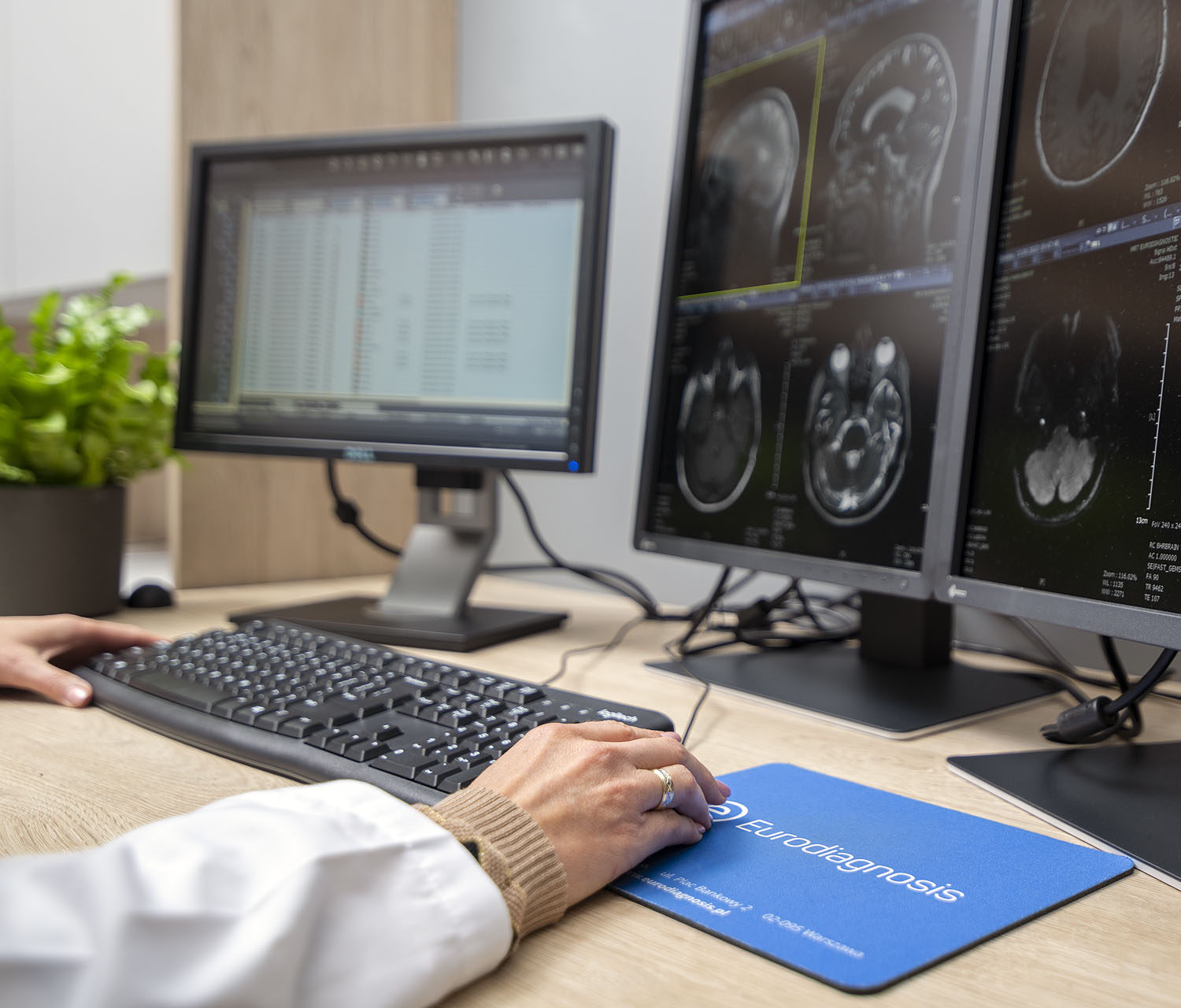
For many patients, an MRI scan is an important step towards understanding the cause of their symptoms. Whether the examination has been performed because of back pain, a sports injury, neurological symptoms or concerns about a more serious condition, most people focus on one thing after the scan is completed: the result.
However, the images themselves are only part of the diagnostic process. Before the findings can be used to guide treatment decisions, they must be carefully reviewed and interpreted by a medical specialist. This is where the MRI report becomes essential.
Understanding who writes an MRI report and why their expertise matters can help patients better appreciate the role of radiology in modern healthcare.
What Is an MRI Report?
An MRI report is a medical document prepared after the images from an MRI scan have been reviewed by a radiologist.
The report typically contains:
- a description of the findings,
- details of any abnormalities identified,
- an assessment of their clinical significance,
- conclusions relevant to the referring physician’s question.
The purpose of the report is not simply to describe what appears on the images. It is to provide a medical interpretation that helps doctors understand what the findings may mean for the patient. If you are unsure how to navigate the structure and terminology of such a document, our guide on how to read an MRI or CT scan report explains it step by step.
In many cases, treatment decisions are based not on the images themselves, but on the information contained within the radiology report.
Who Writes an MRI Report?
MRI reports are written by radiologists, doctors who specialise in interpreting medical imaging studies.
Radiologists undergo extensive medical training and develop expertise in analysing MRI, CT, X-ray, ultrasound and other imaging examinations. At Eurodiagnosis, every MRI scan report, CT scan report and X-ray report is prepared and electronically signed by a certified specialist in radiology and diagnostic imaging.
Their role extends far beyond identifying abnormalities on an image. They must determine whether a finding is clinically relevant and how it relates to the patient’s symptoms, medical history and the reason the examination was requested.
This requires a combination of medical knowledge, experience and clinical judgement. It is also the reason why artificial intelligence supports radiologists but does not replace them.
An MRI Scan Produces More Data Than Most Patients Realise
Many patients are surprised to learn how much information is generated during a single MRI examination.
Depending on the body part being examined, an MRI scan may produce hundreds or even thousands of individual images.
These images are acquired using different imaging sequences and viewed in multiple anatomical planes.
Each sequence provides different information about tissues, organs, joints, nerves or blood vessels.
Before a report can be written, the radiologist must carefully review all relevant images and assess the findings within the context of the clinical question.
Why Interpretation Matters More Than the Images Alone
Medical images do not always provide straightforward answers.
Two patients may have very similar MRI findings while experiencing completely different symptoms. Likewise, some abnormalities seen on an MRI scan may not be responsible for the patient’s complaints at all. A good example is the question of what white spots on a brain MRI actually mean, where identical-looking changes can have very different clinical implications.
This is why interpretation is such a crucial part of the diagnostic process.
A radiologist considers multiple factors, including:
- the patient’s symptoms,
- medical history,
- previous imaging studies,
- information provided by the referring clinician,
- the specific reason for the examination.
Only by combining imaging findings with clinical information can a meaningful and accurate report be produced. If any of these points remain unclear after receiving your result, a radiological consultation allows you to discuss the findings directly with a specialist.
Can Two Radiologists Interpret the Same MRI Differently?
In some situations, two radiologists may place different emphasis on particular findings or offer slightly different interpretations.
This does not necessarily mean that one report is incorrect.
Medical imaging often involves complex assessments that require professional judgement. Factors such as subspecialty expertise, clinical information and previous experience may influence how findings are interpreted.
This is one of the reasons why a second opinion on a CT or MRI scan online can sometimes be valuable, particularly in complex cases.

Why Experience Matters in MRI Reporting
Modern MRI technology provides extraordinary levels of detail, but technology alone cannot replace expertise.
Radiologists must recognise subtle abnormalities, distinguish significant findings from incidental changes and understand how imaging results relate to the patient’s overall clinical situation.
Experience becomes particularly important when evaluating:
- neurological disorders,
- spinal conditions,
- sports injuries,
- prostate abnormalities,
- abdominal diseases,
- suspected cancers.
The ability to interpret findings accurately can have a direct impact on diagnosis, treatment planning and patient outcomes. In oncology in particular, the speed of a cancer diagnosis can be just as decisive as its accuracy.
The MRI Report as Part of a Larger Clinical Picture
An MRI report should never be viewed in isolation.
Although imaging provides valuable information, diagnosis and treatment decisions are based on a combination of factors, including physical examination findings, symptoms, laboratory results and medical history.
For this reason, communication between radiologists, referring physicians and patients remains an essential part of the healthcare process. If you have questions about submitting your images or about the reporting process itself, our team is available via the contact page.
The MRI report serves as a bridge between imaging findings and clinical decision-making.
Conclusion
An MRI scan is one of the most powerful diagnostic tools available in modern medicine, but the images alone do not provide all the answers.
The MRI report translates complex imaging data into clinically meaningful information that can guide further investigations, treatment decisions and patient care.
Behind every report is a radiologist whose expertise, experience and clinical judgement play a vital role in ensuring that imaging findings are interpreted accurately.
Ultimately, it is not just the scan that matters, but the quality of the interpretation that follows. If you already have your images and need a professional interpretation, you can request a remote CT or MRI report prepared by an experienced radiologist, usually within a few working days.


